Nordic Walking - The Benefits
Nordic Walking or walking with poles, the benefits are clear within the first few minutes of trying and the Cooper Institute in Texas has issued the following findings following comprehensive tests into the activity.
1. Burn more calories in less time
- Consumes approximately 400 calories per hour (compared with 280 calories per hour for normal walking) Energy consumption increases when using poles by an average of 20% compared with ordinary walking at the same speed without poles Heart rate is 5-17 beats per minute higher. Up to a 46% increase in energy consumption when fully utilising the correct technique (Cooper Institute research, Research Quarterly for Exercise and Sports 2002 publication).
 , published in the Proceedings of the National Academy of Sciences. found that walking is the best way of preserving both mental and physical health in old age.
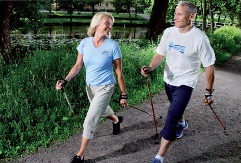 Nordic Walking is a fitness activity that enhances the natural walking movement by the addition of specifically designed walking poles. Nordic Walking has become a worldwide phenomenon as people discover the health and fitness benefits of this unique and effective form of exercise.